Snapchat targets AI slop by removing fully AI-generated videos from Spotlight recommendations, helping real creators gain more visibility and rewards.
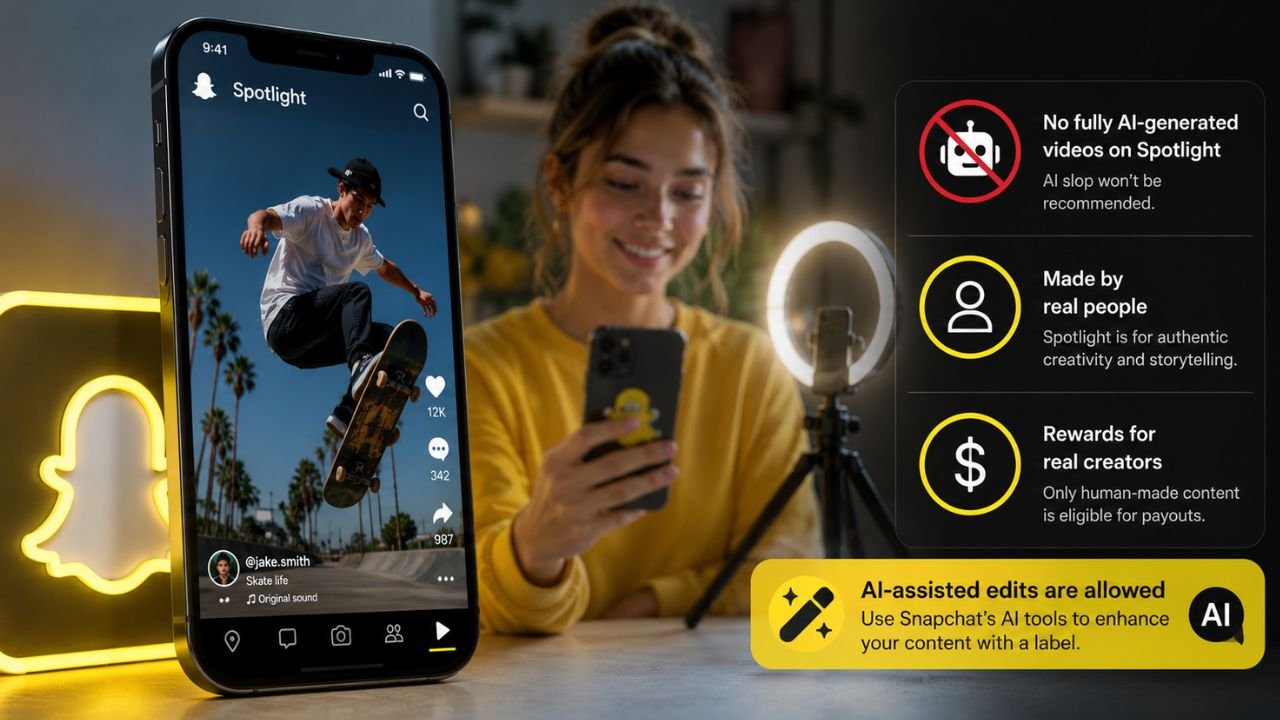
Snapchat has announced a major change to how it treats artificial intelligence videos on its app. The company said it will stop recommending fully AI-generated videos on Spotlight, its popular feed for short videos. This move puts Snapchat among a growing group of tech companies pushing back against so-called “AI slop.” The change matters because it affects how creators reach new audiences on one of the world’s biggest messaging apps.
Snapchat announced the update on Friday through a blog post. The company said its recommendation system will now only promote videos made by real people. Videos created entirely through AI tools will no longer appear in Spotlight’s public discovery feed. This does not mean AI content is banned from Snapchat completely, only that it won’t be pushed to new viewers.
The company explained its reasoning in a statement. Snapchat said it wants Spotlight to stay a place where people can find real creativity from real users. It said there is lasting value in rewarding personal storytelling and original ideas. The company pointed to a rise in low-quality, repetitive AI content spreading across the internet.
There is an important exception to this rule. Creators can still use Snapchat’s own AI tools to edit or enhance their videos. These AI-assisted videos remain eligible for Spotlight and will show a label marking AI’s role. Snapchat said AI can still be a meaningful part of the creative process for many users.
This move is also tied to money. Snapchat runs a rewards program that pays creators for popular Spotlight videos. Fully AI-generated videos will no longer qualify for these payouts. The company wants its reward pool to support human creators, not accounts that mass-produce AI clips with little effort.
Snapchat is not alone in facing this problem. LinkedIn recently added a button letting users flag posts that “seem like AI slop.” Substack built a tool to help readers spot AI-written newsletters. YouTube also tightened its rules, blocking payouts for generic or repetitive AI content. Meta faced backlash over an AI photo-editing feature on Instagram and later removed it.
In short, Snapchat is choosing algorithms over user reports to fight AI slop. The company says human-made content keeps people engaged and coming back to the app. It admits no detection system is perfect, so some AI videos may still slip through. Going forward, more platforms may follow Snapchat’s lead as AI-generated content continues to spread online.
Trending