Google shuts down Nano Banana 2 on Google Earth within a day after fake AI-generated images sparked concerns about misinformation and platform trust.
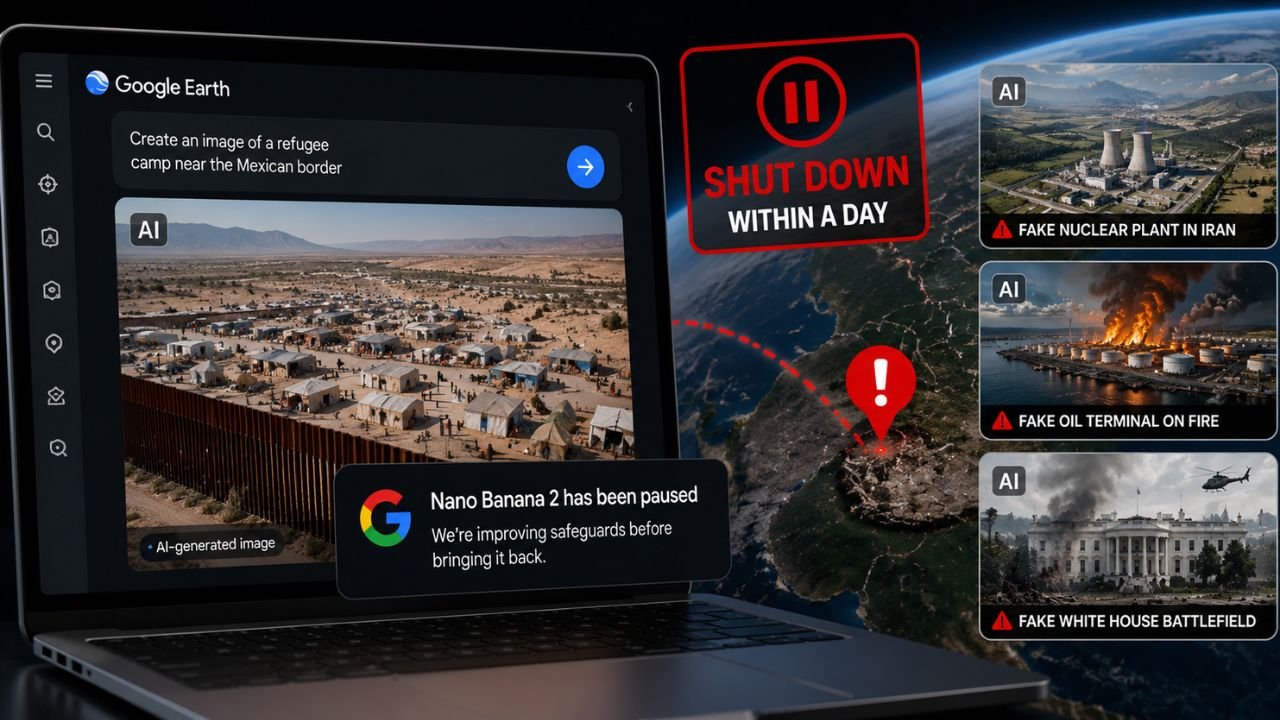
Google launched a new AI feature called Nano Banana 2 inside Google Earth on Thursday, July 30, 2026. The tool let users create AI-generated images of real locations using simple text prompts. Within just one day, Google shut the feature down. The company said people were using it to create fake and misleading images of real places.
The tool allowed anyone to zoom into any spot on Earth and type a sentence describing a scene. Google Earth would then generate a photorealistic image based on real satellite, aerial, and 3D data of that location. It launched worldwide on the web with no waitlist or sign-up needed. Google had promoted it for things like historical scenes, education, and real estate visuals.
Problems appeared almost immediately after launch. Digital ethics researcher Henk van Ess tested the tool and created fake images showing refugees near the Mexican border. He also generated a fake nuclear plant placed inside Iran. He shared these examples publicly to show how easily the tool could be misused.
Other people and news outlets ran similar tests. NPR generated a fake image showing an oil terminal in Iran on fire. Futurism created a fake image of the White House shown as a battlefield. These examples spread quickly online and raised alarm among journalists and researchers.
Critics pointed out that Google Earth is widely trusted as a reliable source for real-world images. Journalists, researchers, and human rights groups often use it to verify events and locations. Bellingcat researcher Jake Godin said the tool mainly made it easier to create fake satellite-style images. Experts worried this could damage trust in the platform.
Google responded quickly with an official statement posted on its News from Google account. The company said it saw people sharing screenshots that appeared to break its policies. It added that generated images were watermarked as AI-made and did not appear in the main Google Earth view for other users. Even so, Google said it decided to pause the feature.
Google says the shutdown is temporary, not permanent. The company is now working on stronger safeguards before it might bring the tool back. This case shows how quickly new AI tools can be misused, even when companies add safety features like watermarks. It may take time before Nano Banana 2 returns to Google Earth in a safer form.
Trending